

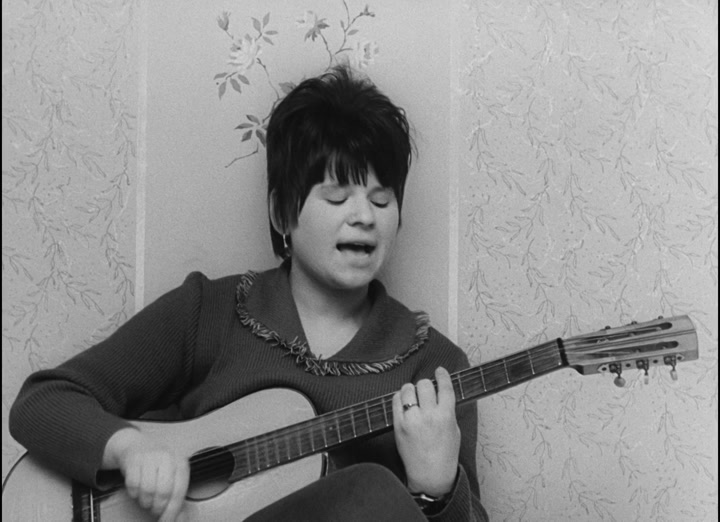
Loves of a Blonde begins and ends with a song. Each time, the song is performed on acoustic guitar and sung by a young woman who works in a shoe factory in a provincial Czech town. The first is a rocking pop number sung by a woman with a rough approximation of a chic new-wave haircut. She looks straight at the camera with an air of defiance and declares herself to be a hooligan. The last is sung by a woman with long dark hair hanging over her face, and is a sad, wistful, and wordless tune. She sits on the edge of a thin bed in the silent shadows. At the start and close of the film, we also see these women and their coworkers sleeping in bunks in their small dormitory room, with an oddly moving clutter of clothes and teacups and milk bottles — the quiet remnants of their quiet lives.
Made by Milos Forman in 1965, Loves of a Blonde is a beautiful, funny, heartbreaking film. Like his Fireman’s Ball, this film is about ordinary people and their desires and hypocrisies. And it is also a political film, though more subtly so, as is often the case with films with female protagonists.
Andula, played by Hana Brejchová, is one of the young women who works at the shoe factory. Her life is stagnant and stilted, trapped as she is on the edge of nowhere, with little to do but work, air-brushing shoes as they come off the assembly line. Due to a mistake made by central state planning, which was thinking more about the rate of production than the happiness of those producing, the population of the town has a 16 to 1 ratio of women to men. There’s little hope of romantic escape, and not much else to hope for in the lives of these women. The kindly owner of the shoe factory asks army officials to place a regiment in the town, saying of the women, “They need what we needed when we were young.”
The regiment arrives to the disappointment of the young factory workers, who find it composed of married middle-aged reservists. At a dance these men encourage each other to try their luck with the young women, clumsily sending a bottle of wine to the wrong table and dropping a wedding ring, which leads them in an awkward chase across the dance floor. The women wonder if they’re just desperate enough to follow these unappealing men into the woods.
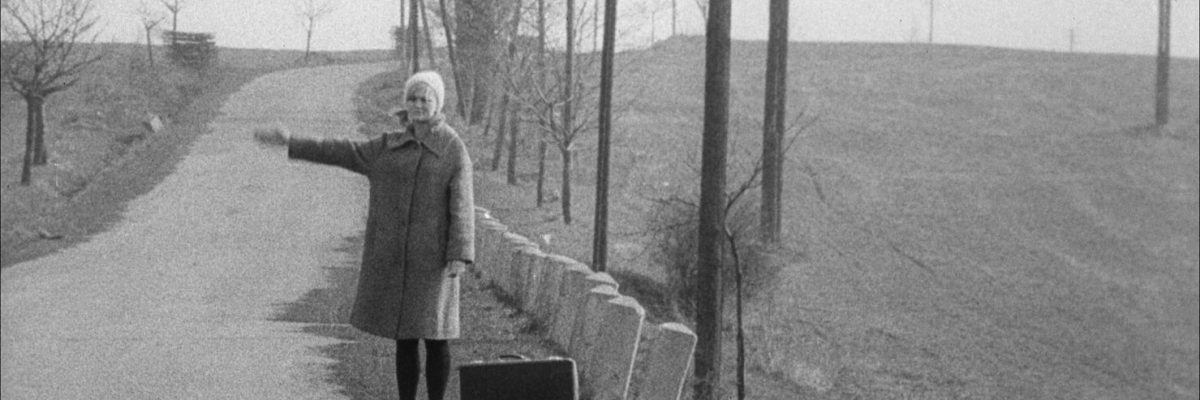
Andula finds a glimmer of hope in the attentions of young Milda, a pianist from Prague who played in the band at the dance. She wants to trust him, because he’s attentive and kind, though not very subtle in his advances. He shows an interest in her, even asking why she has scars on her wrists, though he returns to his seduction before she finishes her story. They spend the night together, and then he’s gone. After a few weeks, she hitchhikes to Prague with a small suitcase. She arrives at Milda’s apartment to find him out at a gig, though his mother and father are home and in an uproar over her appearance. Milda returns home and encounters a verbal storm from his parents, who force him to sleep between them in their small bed. Andula, in the next room, weeps silently as she listens to their heated discussion through the door. She returns to the shoe factory and tells her friend a sad, hopelessly hopeful tale of her adventure as they lie in their cluttered room.
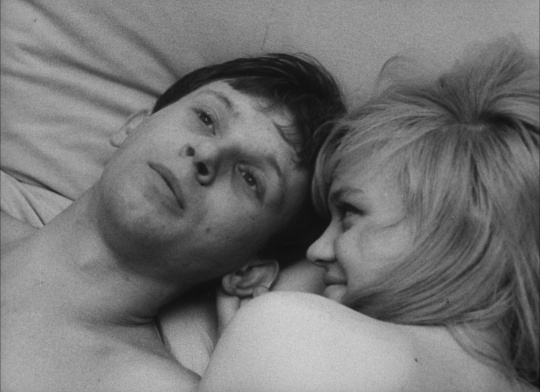
The story is told with such style and warmth and humor that it’s ridiculously compelling. Forman used a mixture of actors and non-actors. In the dance, the camera rests on the faces of people sitting and waiting to dance, and you feel that any of them have a story worth telling, they’re so real and expressive. The scenes in Milda’s bedroom are perfectly filmed, beautiful and simple. You know he’s a scoundrel, she knows he’s a scoundrel, but he’s such an unlikely lothario, and he’s so funny and unlike everybody else in town. She seems so happy to share a joke with someone, to speak in an unguarded manner, to laugh. She decides it’s worth it to trust him, if only for this night of human connection, and the faint promise of more to come. Milda’s parents, played by non-actors, are comically strident, but it’s desperately sad, too, to think that all of their squabbling will only make it easier for Milda to send Andula back to her life of loneliness and exile. And you can’t help but think that this life, this dreary arguing, is what a romantic connection might lead to. You can’t help but imagine Milda’s parents as young people, searching for love.
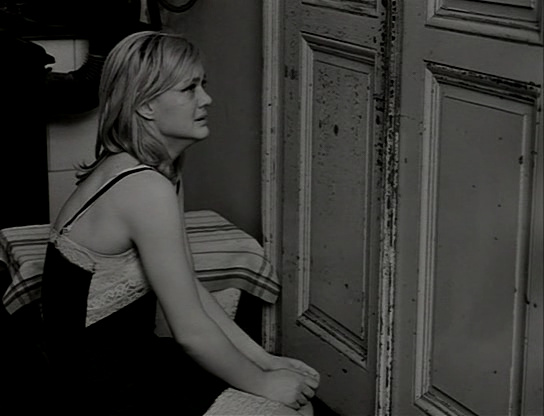

There’s a certain detachment in the way the story is told. We never really understand what’s going on in Andula’s mind. We never learn the full story of her suicide attempt. We get glimpses into her past and what her home life was like, but we never learn more than the small amount that Milda hears before he switches the subject. In a few scenes with her ex-boyfriend, we see the sort of unhappy and controlling relationship she’s trying to avoid in searching for Milda, but the story of her life with her ex is never fully told. Though we see her body and not her mind, the film didn’t feel exploitative or objectifying to me. It seemed, rather, respectfully representative of her silence and her loneliness. Perhaps this is due to Brechová herself, who conveys so much with so few words, with her air of hopeful despair, and her constant resigned smile. You can feel her great aching emptiness as she clutches at straws of hope and tells herself stories about her life.
The film was made in 1965, and in the outside world, things are changing, especially for young people. But those changes filtered slowly through the iron curtain. The pop music, the new fashions, the changing morality, the changing idea about how much control women should have over their own lives, all of that is out of reach for the women at this provincial shoe factory, though they’re aware that it’s happening, somewhere else. The film is about all of that, but at its deepest level, it is a sweetly sad poem of human desire and loneliness. The women need what we all need: physical and emotional human connection, a chance to grow, and something to hope for.

 magpiesmagazine.com