

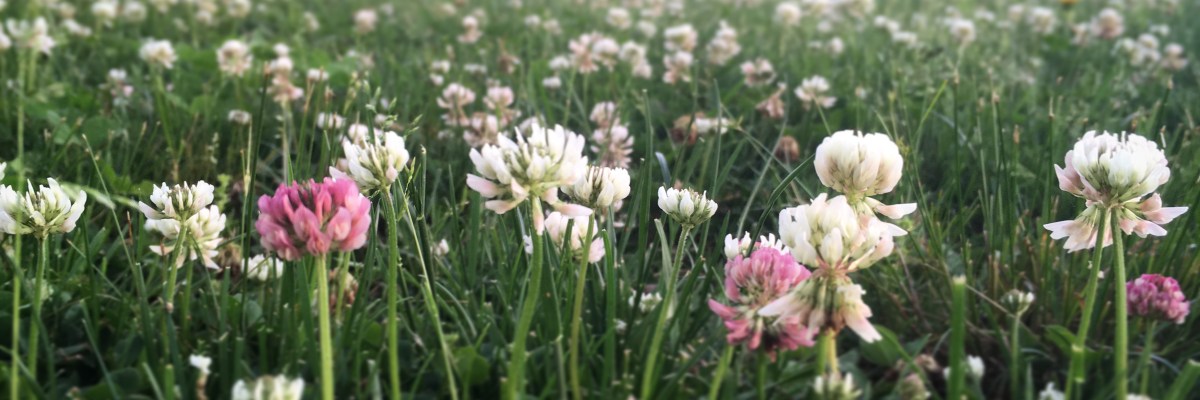
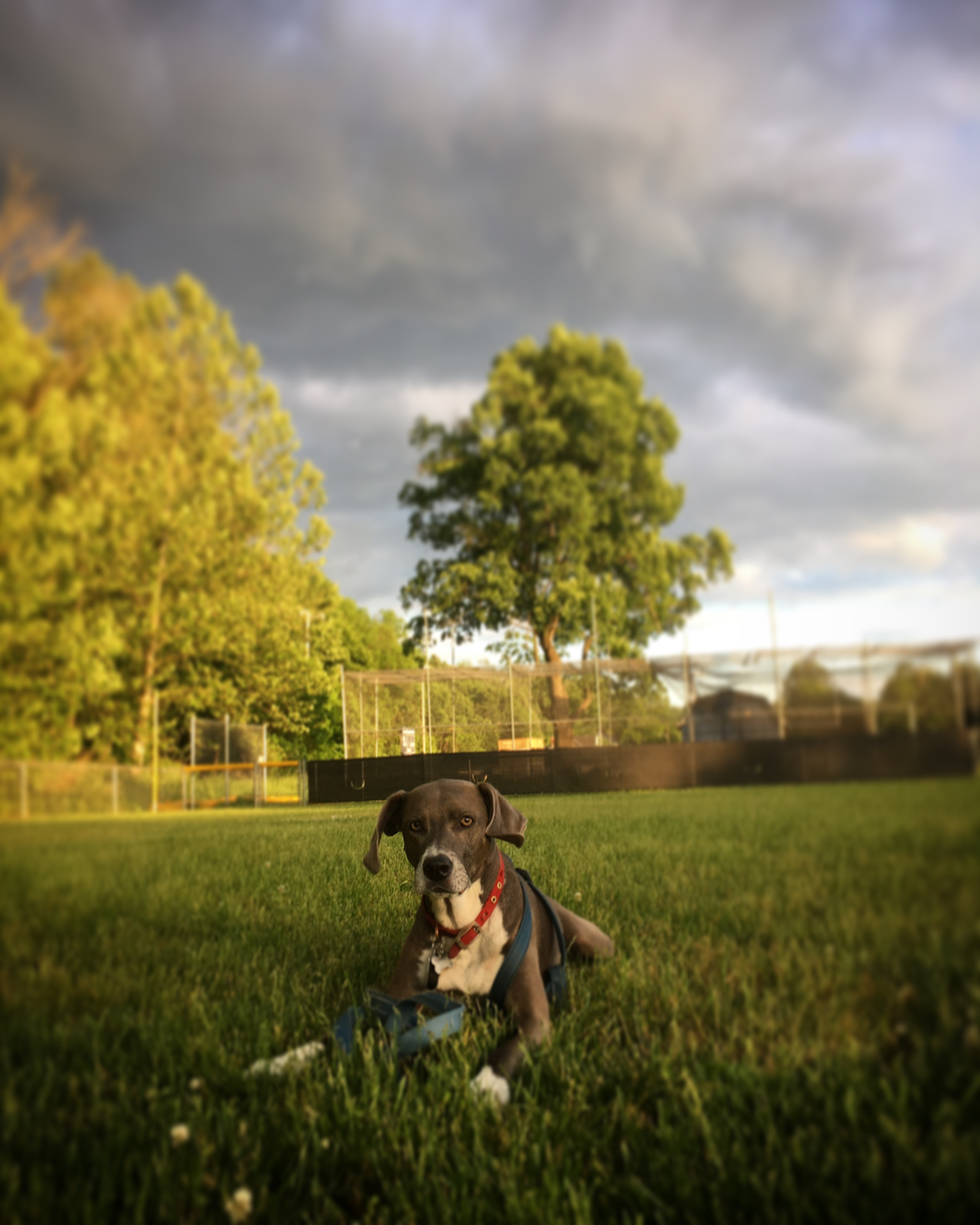
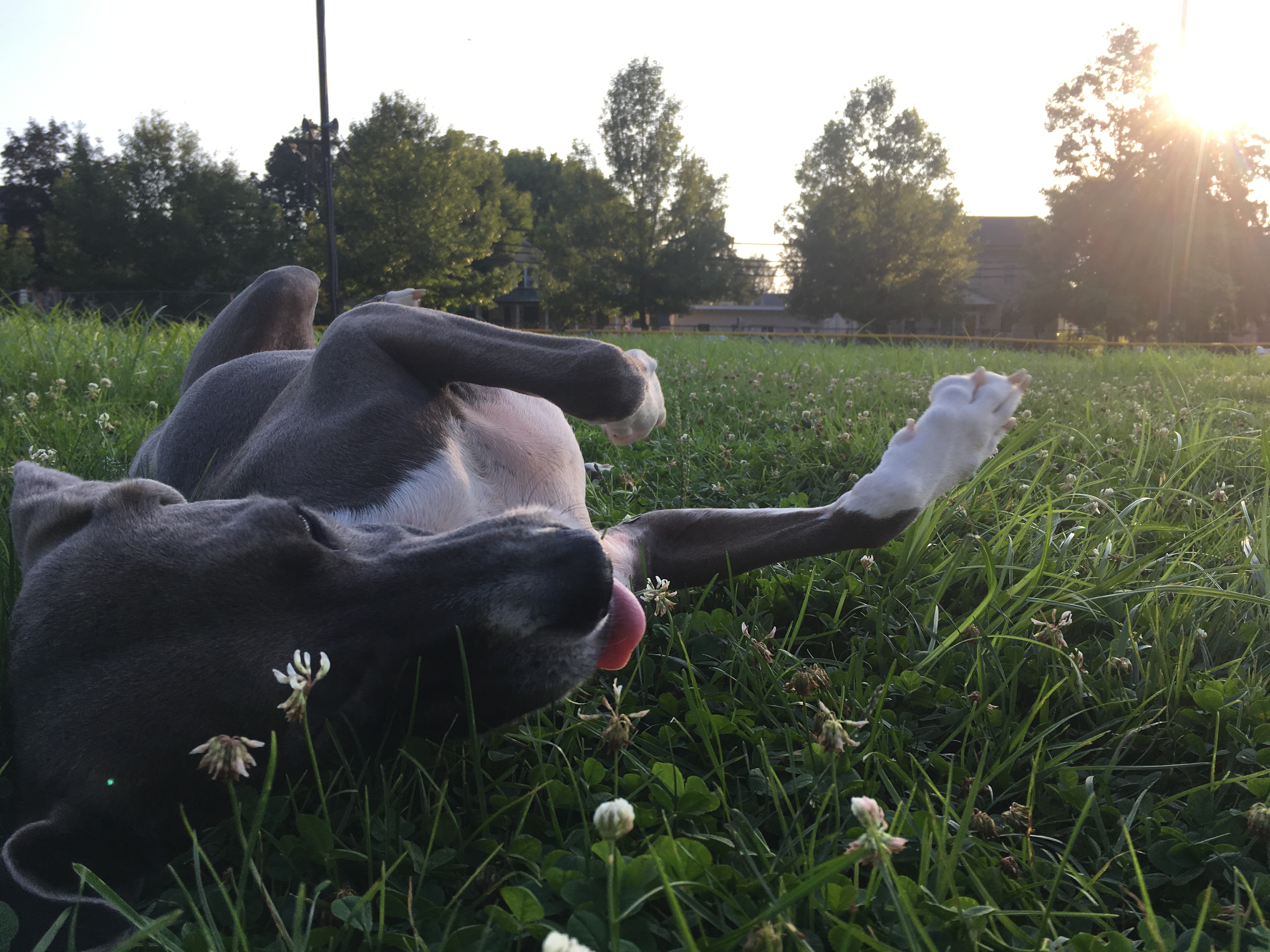
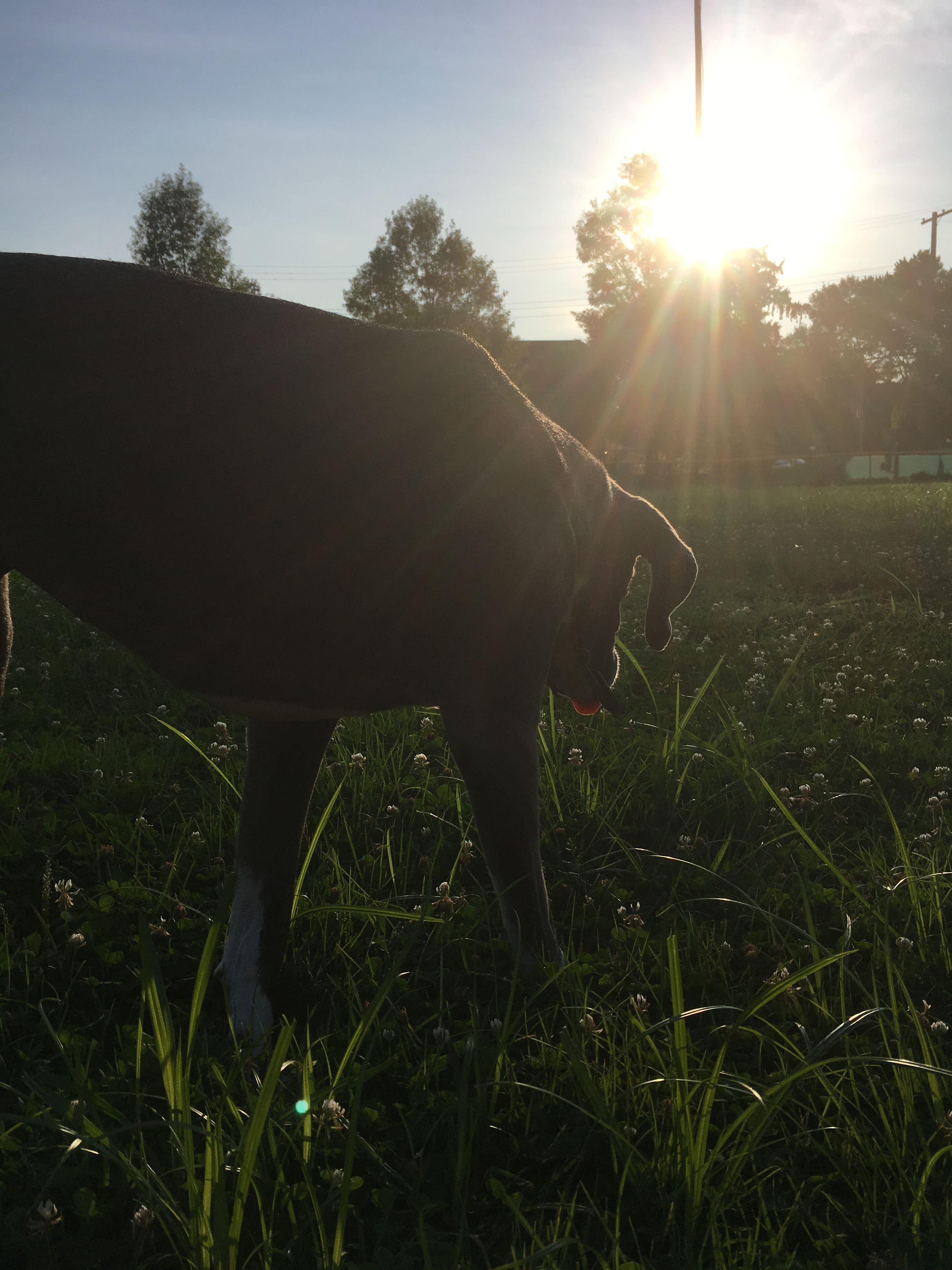
Coming home from the field at close of day we met a man with a loose limping stumble swagger walk. He said, “Why aren’t you running? You should be running? You’re always running.” I said, “Never in the evening only in the morning.” And I thought back to that very morning when Clio and I stood on the damp edges of the field, and she rolled in the clover, swimming through it, ecstatic. I stood holding her leash, and I was tethered as well to the haunting of the night past and the worries of the day to come. I thought about getting home, getting on with my day, because I am always running.
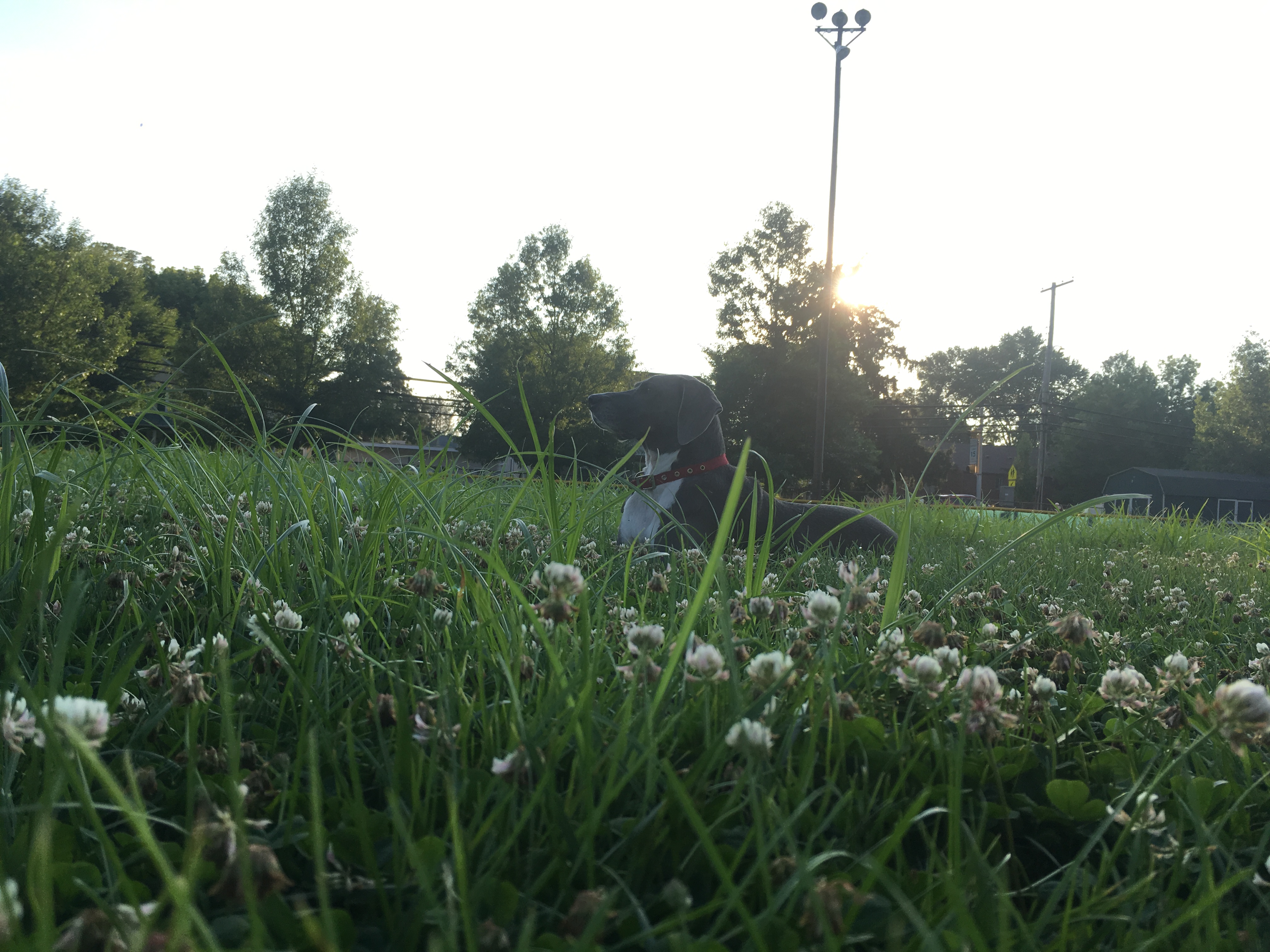
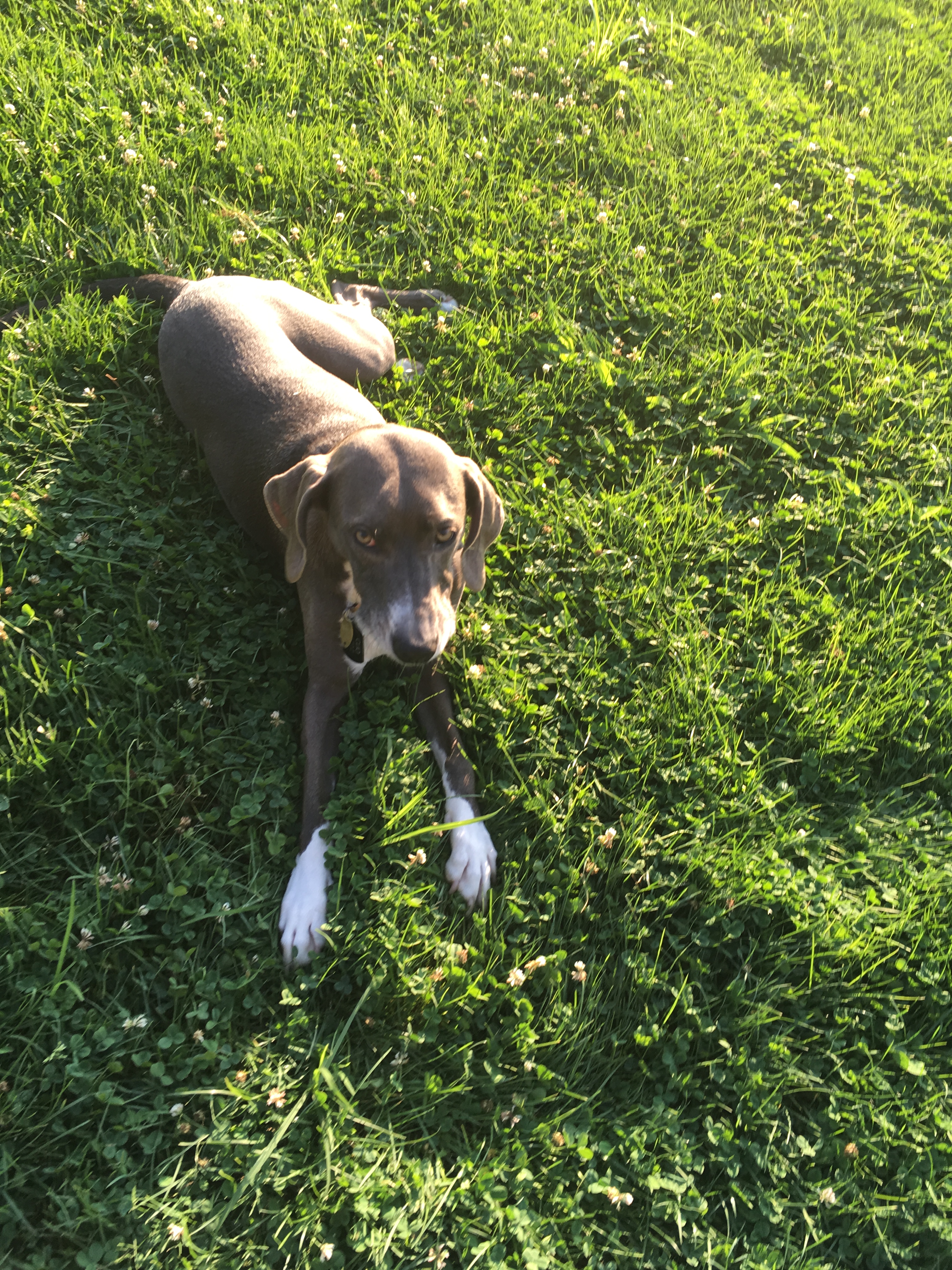
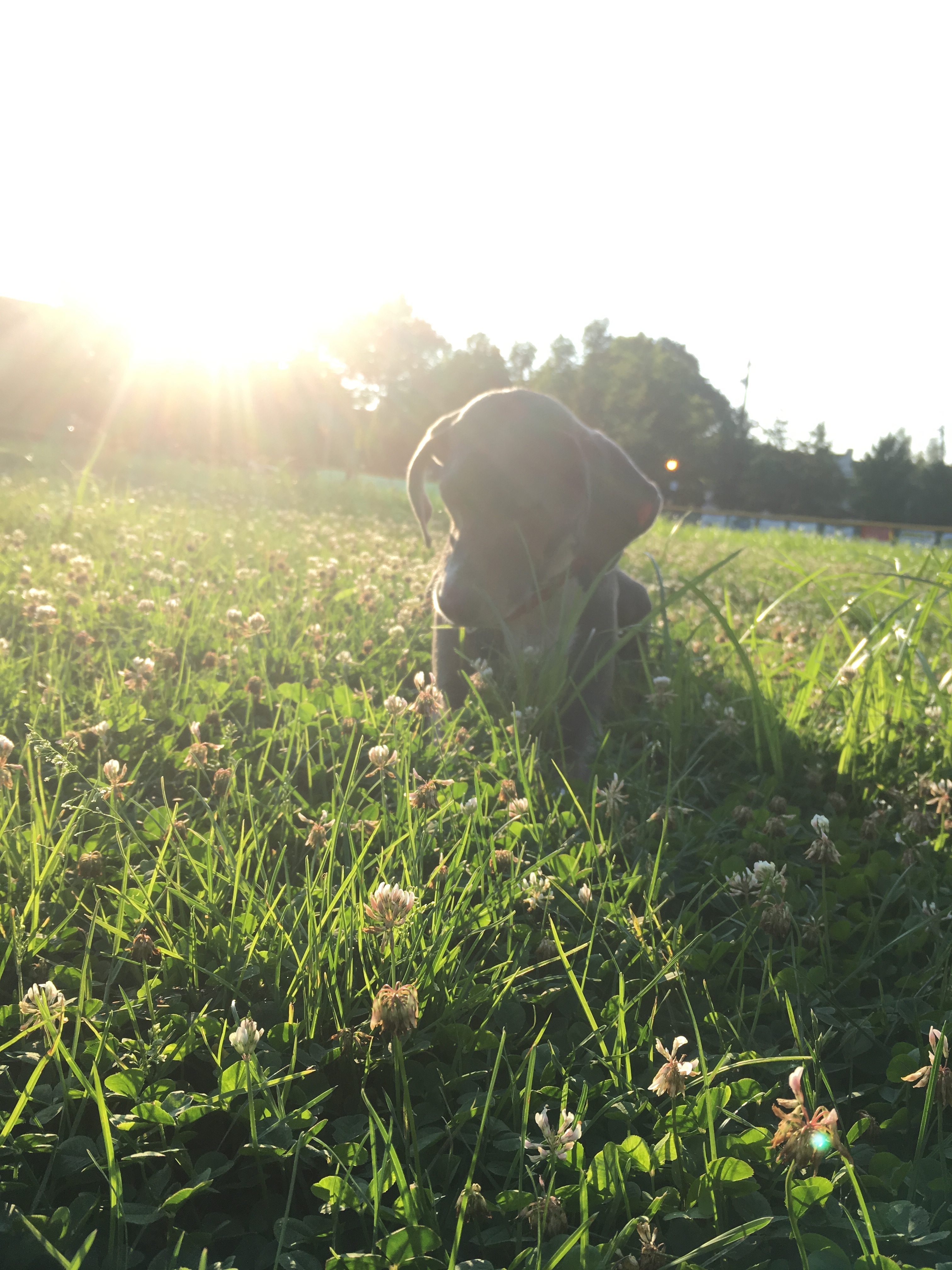
And then she stopped and rested in the rabbit grass, and looked up at me, all glowing eyes and clover-dew wet otter fur. She rested on her elbows and put her nose in the air, her ribs rising and falling and rising and falling with each deep breath as she tried to identify a dog moving along the far edge of the field, out of her sight but not out of mine. We’ll be gone by the time it reaches us, but she doesn’t care. And it occurred to me that there’s nowhere else I needed to be, nowhere more important than this place at this time, standing on a cool and warming June morning with Clio rolling in the clover. This is the first lesson.
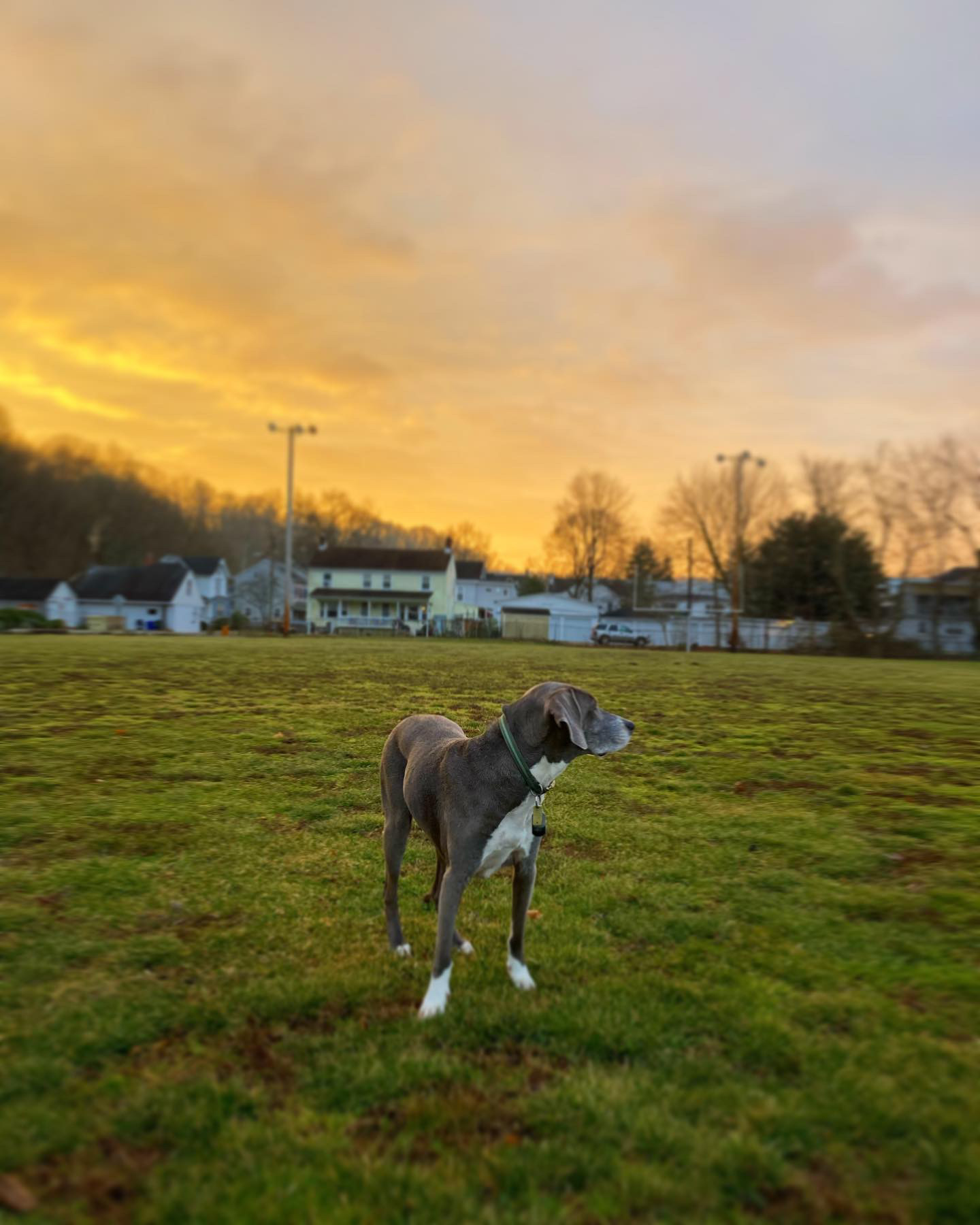
We go to the field nearly every day in every weather: In the fall when the fog is so thick we can’t see the other side and the spiderwebs stand out silvery against the dark surrounding trees, in the winter when I break through a thick crust of snow with each step, but Clio dances along the surface. And in June, when the field is full of clover and you can smell summer rising out of the wet grass. We go first thing, before I can think or speak clearly, and I don’t always feel like going, but I’m always glad I did. No matter how tired I am, or how much my head and body aches, through colds and flu and covid, running around a field with Clio always makes me happy, it’s restorative.
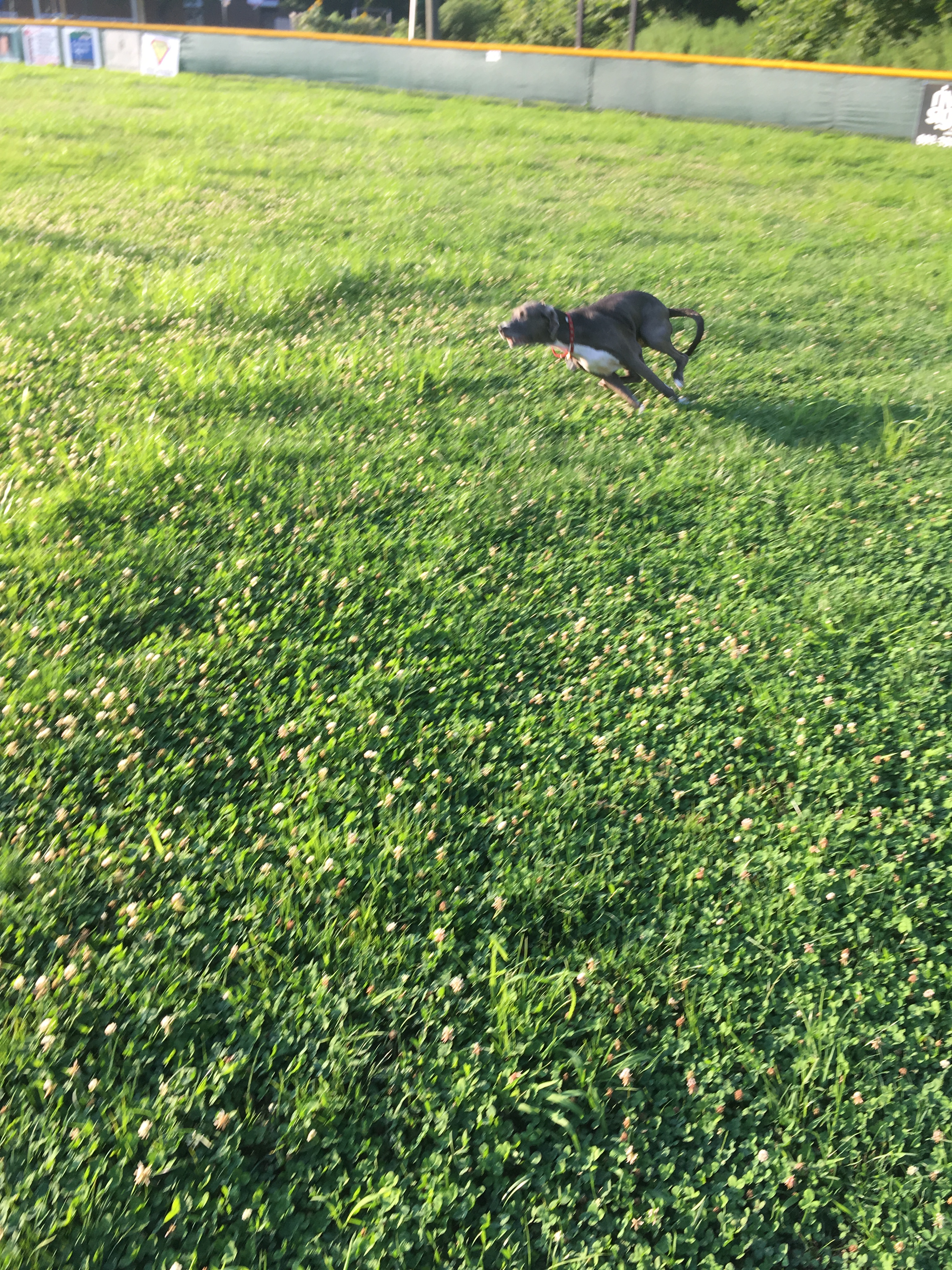
We’re not really supposed to be there, and people have complained, the police have told us to leave. But still we go. And I think these days that if the police came I would say, “But officer, we’re growing older, Clio and I, each of us at our own alarming rate. Look at how fast she is. Look at how happy she is to run so fast and so free. Look at the joy on her face.” If you can run that fast and it makes you happy, you should run that fast, as fast as you can, every day. Of course I’m not really speaking of running, however fast. I’m speaking of doing something you’re good at that gives you joy, that elevates your spirits, even if it’s just for a few minutes. You can find some small pocket of time for it, every day.
Every walk for a month or so in early spring, she brought home a stick. She would run around the field, trying one stick or another, but once she’d found a good stick there was no dillydallying and stopping to smell anything or talk to a dog friend. She’d just get home as fast as she could, doggedly, navigating all obstacles with the stick in her mouth. And when we got home she would leave the stick by our front door. We would gather the sticks and put them in the fire pit in our very slowly thawing backyard.
Clio didn’t have plans for the stick when she got home — it was all about the journey, the process, the act of carrying the stick home. I feel like this is an important life lesson. Others have written about this, but nobody so well as Clio.
The creative process can be like carrying sticks home. When you have a thought you like, maybe out on a walk with your dog, you’ll carry it home, doggedly, and leave it by your door. You don’t have to make plans for it when it’s done, it’s just about the process of carrying it home from your head to a piece of paper or a canvas.
If you question why you write or draw or create anything at all (and believe me, I do) it becomes hard to create anything at all. If you think “What’s it all in aid of?” “What good will it do?” you might not do it at all. But though you might not feel like doing it, you’ll always be glad that you did. The process is so appealing. The process of walking, during all the seasons, of making meals, of thinking thoughts and writing them down, of dreaming dreams and trying to paint them. Of bringing sticks home, proudly, and leaving them by the door, even in the knowledge that they’ll go up in sweet-smelling smoke on a cool spring evening.
That’s what it’s all in aid of. Why does it make it all worthwhile? I honestly don’t know, and yet it does, I have to believe that it does. Carry your stick home, friends. Don’t question it, carry it with pride, nose high, and enjoy every second of the journey.
Categories: featured

 magpiesmagazine.com
Absolutely lovely. Soul restoring. I drive to two feral cats. I’ve been driving to them for over a decade now. I do not like driving… I dread getting in the car sometimes, but , like you, I’m always grateful to them for the love they feed to my soul. We sit in quiet and just love being together. The three of us feeling safe , happy and loved… we sit for about an hour an a half. No phones, but ‘’hello’s’’ to passersby… very few don’t want me there, ( I’m on a foot path along the inter coastal), but most smile back and say hello. Occasionally a few stop to chat. AnnieKat just loves when people stop and chat and always makes herself known, while keeping a distance. Took ten years of love for Billie to get on my lap, and last night, for the first time, he slept… my soul rejoiced… I get you : )
LikeLike
Aw, thank you Randi. That’s beautiful. The cats are lucky to have you, as I’m sure you feel lucky to have them.
LikeLike